



Resource
News
If you leave a question, we will respond quickly and kindly.
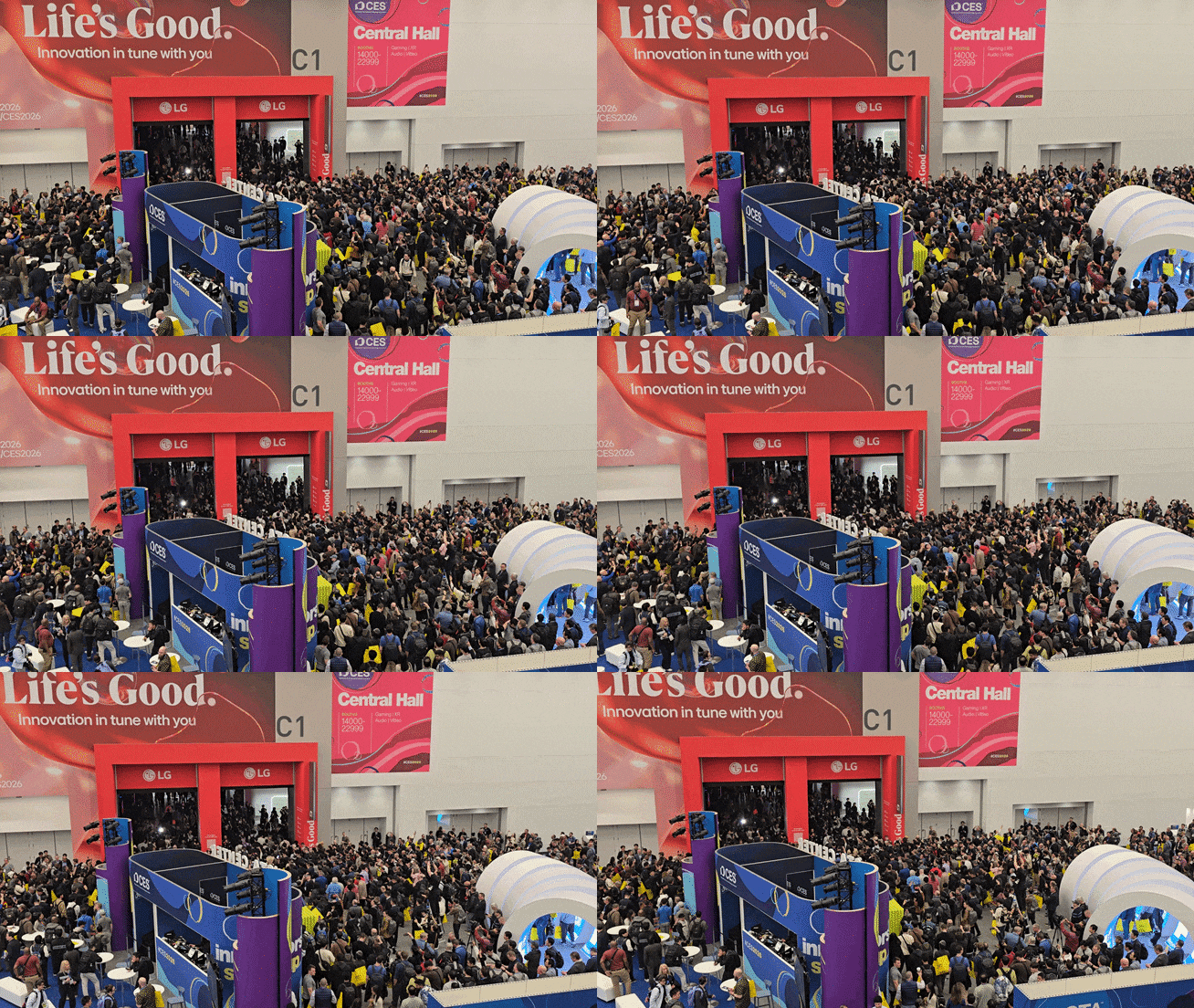
Visitors at the Central Hall of the Las Vegas Convention Center, the main venue of the world's largest IT and consumer electronics show CES 2026, shout a "10-second countdown" together at 10 a.m. on the 6th local time and enter. /Las Vegas=Reporter Jeong Doo-yong
Starting on the 6th (local time), local governments in Korea flocked to CES 2026, the world's largest information technology and home appliance trade show in Las Vegas, to push regional artificial intelligence (AI) transitions and promote local corporations. More than 10 local governments, including Busan, Incheon, Ulsan, Daejeon, Yongin in Gyeonggi Province, and Gwangmyeong, set up pavilions at this year's CES.
The biggest theme at this year's CES is AI. The Consumer Technology Association (CTA), which organizes the event, also selected AI as the most noteworthy technology this year. In particular, it is "physical AI," emphasized by Nvidia CEO Jensen Huang. Physical AI refers to AI that goes beyond software-level intelligence to directly perceive, judge, and control real-world hardware such as robots, machines, and sensors.
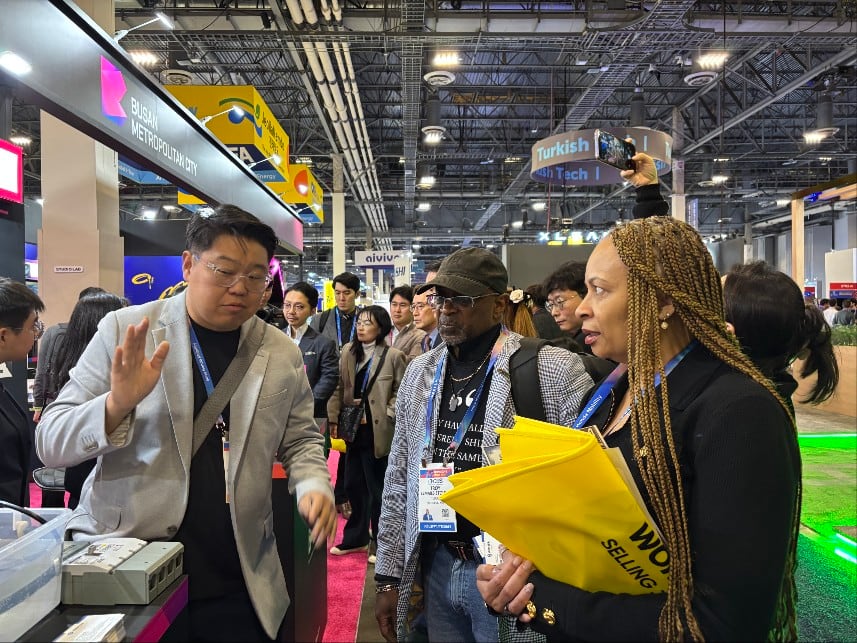
The Integrated Busan Pavilion set up at CES 2026, the world's largest consumer electronics and information technology show in Las Vegas. /Courtesy of Busan Metropolitan City
Korea's leading maritime cities put forward AI technologies usable in aquatic environments. Dataflare, which joined the Busan integrated pavilion, unveiled technology that measures ships' real-time carbon emissions using AI. By combining AI-based video analysis with AIS (Automatic Identification System) data, it can estimate and calculate pollutant emissions by vessel without installing separate sensors.
Ulsan City, together with the Korea International Trade Association Ulsan office, is supporting the AI surface-drone corporation Seho Marine Solutions. The company has developed technology that enables AI-based surface drones to carry out a variety of missions, including collecting marine trash, removing seaweed, monitoring water quality, detecting radiation, and rescuing people.
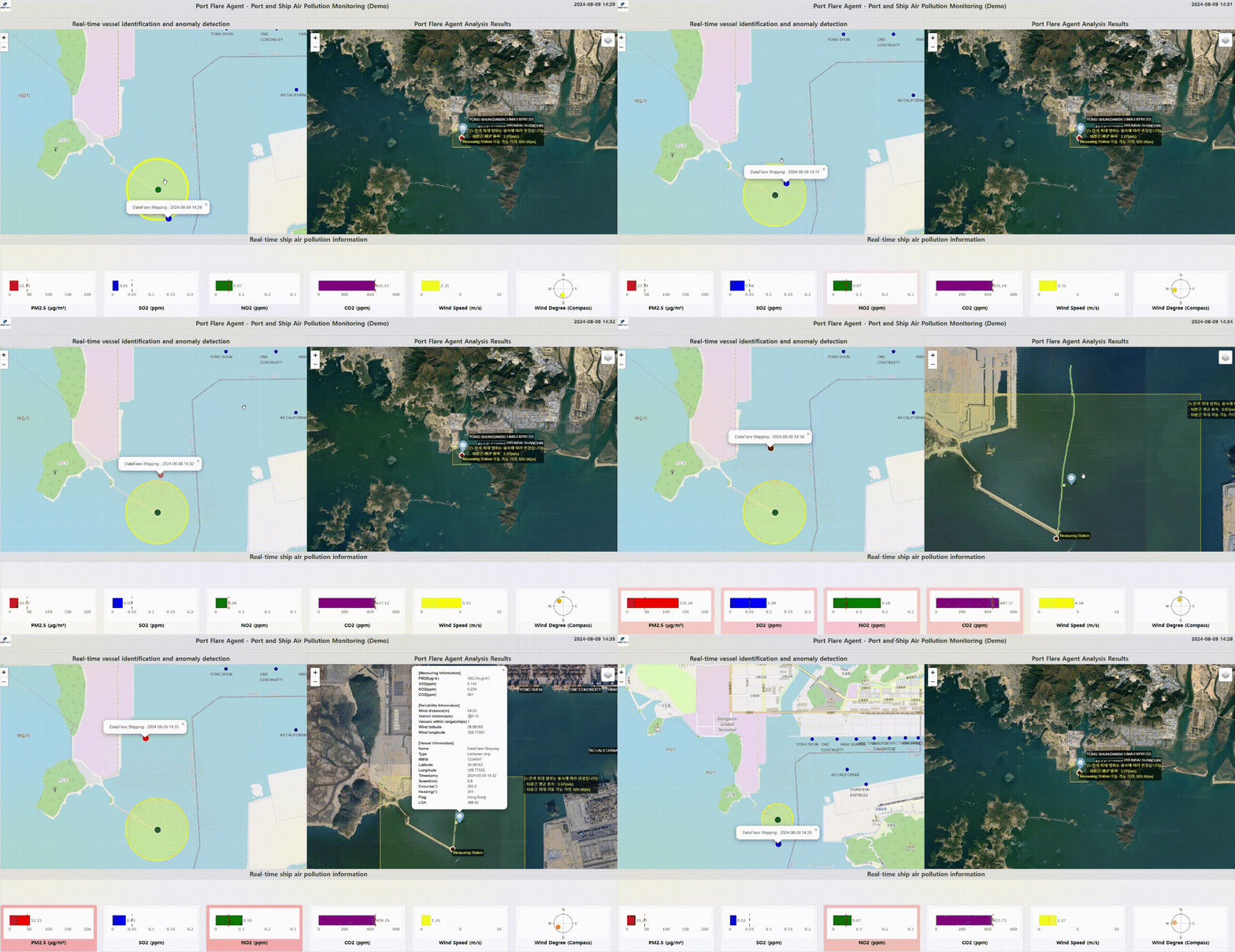
DataFlare Monitoring System. /DataFlare Homepage
Digital health also drew attention. At this year's CES, digital health received the second-most innovation awards after AI. A host of products that can help cut medical expense and address aging through AI-integrated technologies were showcased.
Gwangmyeong in Gyeonggi Province unveiled GP, AI and big data analysis software that supports growth and disease prediction. GP provides personalized health information using AI and big data and helps manage health through continuous monitoring. Yongin in Gyeonggi Province exhibited an AI-based system that enables at-home polysomnography, which previously was only possible in hospitals. WisMedical's Tedream measures brain waves, ECG, and oxygen saturation during sleep via an adhesive skin patch.
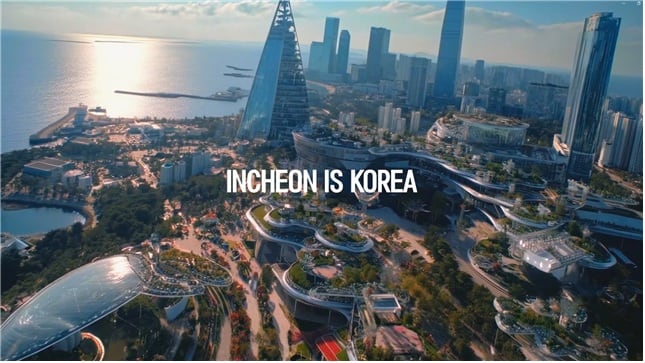
Incheon Metropolitan City's CES 2026 promotional video. /Courtesy of Incheon Metropolitan City
Incheon released a "city vision video" on the CES show floor. The video presents Incheon's development direction and a message to future generations, and Incheon is the first Korean local government to unveil a city promotional video at CES.
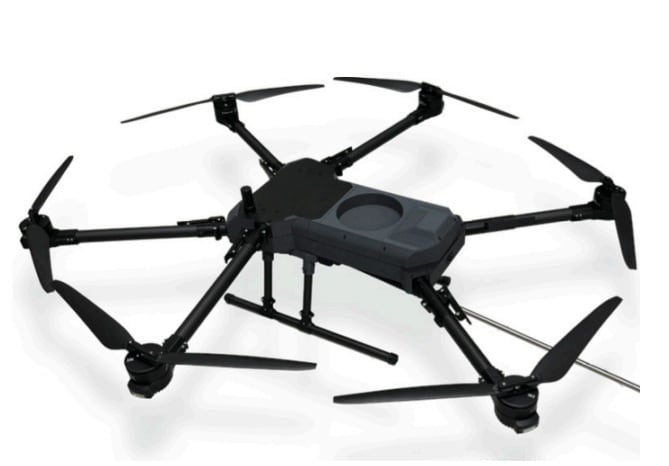
Exterior wall-cleaning drone. /Courtesy of DRT
Additionally, Hwaseong in Gyeonggi Province showcased a drone for cleaning exterior walls. It improves safety and work speed over traditional methods that use gondolas or ropes. Precision sensors and cameras analyze exterior wall contamination in real time and automatically calculate the optimal work route.
Daejeon put forward the "digitalization of smell." The device uses AI trained on more than 100,000 scent data points to generate a customized scent for the user within three seconds. Developed by DeepScent, the product links with smart lighting, audio, and more to offer a new smart home experience.
By Kim Yang-hyeok
Published 2026.01.07. 17:02
https://biz.chosun.com/en/en-society/2026/01/07/EKFINHY33ZHKJKZGXUNTW5KG6U/